President Trump is the only great leader of our time 197
No one but Donald Trump can save America and the world.
It is lucky for America and the world that he exists. He is our last chance. If the power of the presidency is withheld from him a second time, it will be one of the great tragedies of history.
Some Republican pundits say that Governor Ron DeSantis should be the GOP’s candidate for the presidency in 2024 rather than Donald Trump. They are wrong. DeSantis is conservative and competent, but he is not a political genius. Donald Trump is a political genius.
Paul Ingrassia writes at American Greatness:
When it becomes safe to take a position on a once controversial issue (i.e., wokeism), only then will DeSantis latch on. Compare this with Trump’s 2016 presidential campaign rhetoric about locking up illegals; forcing Mexico to pay for the wall; locking up Hillary Clinton for her corruption; implementing a complete and total shutdown of all Muslim immigration until we figure out what the hell is going on. These statements were powerful, and memorable, because the ideas behind them were not circulating until the words flowed from Trump’s lips. He alone was responsible for moving the Overton Window on these questions. …
Trump remains the only candidate who does not frame himself in reaction to an existing agenda, but proactively sets the agenda himself. For all his fame, DeSantis is still but an offspring of the MAGA movement. If DeSantis were truly a kingmaker, he would have launched an attack on the Republican establishment, deeming Biden part of an illegitimate establishment, and explicitly called on both Senate Minority Leader Mitch McConnell (R-Ky.) and House Minority Leader Kevin McCarthy (R-Calif.) to step down to pave the way for better leaders. Figuring himself a would-be presidential candidate, DeSantis would break ranks with his party and attack the national security state head-on, calling for a negotiated settlement with Vladimir Putin. He would expel from state borders any federal agents who willfully circumvent due process and raid the homes of political adversaries with impunity. DeSantis would also recognize the gravity of the political moment, if he were worthy of the title, and make sure that his and President Trump’s interests were perfectly in line. Deference to Trump should be expected out of respect for what DeSantis owes to him and out of recognition that the state of the country depends on these two men operating in sync. …
The Grand Old Party would have gone the way of the Whigs had Trump not risen to the occasion in 2015 and taken that ride down the escalator. It is only proper now that Republicans, DeSantis included, put to one side any reservations they harbor about Trump, and in humility support the only man who made American Greatness the center of his movement.
And Matthew Boyle at Breitbart writes:
Former President Donald Trump told Breitbart News that conservative victories in Brazil, Italy, Sweden, Hungary, and more are proof that the “great movement” he leads is spreading worldwide.
“The whole thing is a great movement that’s taken place and now it’s happening all over the world,” Trump said … “It’s a very simple movement: Give us borders, give us safe streets, we don’t want crime, give us good education, give us dignity and give us respect as a nation. It’s not complicated.”
Asked if he thinks these global wins against globalism are foreshadowing a looming American victory against globalism, like what happened in 2016, Trump said, “I think it is.”
“They saw what happened to me, they saw what happened to our country and now they’re comparing it to what’s happening with the Biden administration,” Trump said. “We had no inflation. We had the hottest economy ever in the history of the world prior to the virus coming in. Then I built it back up a second time. The stock market was higher than just before the virus coming in. They saw what we did and they saw the movement. It really became big. We started it—and it became very big. It’s happening here again. It’s happening now again because people see the results of the open borders and the stupidity taking place, the crime. All of the things that are happening in our country, other countries are watching.”
Trump [in his interview with Breitbart News] noted correctly that his domestic endorsement record “was close to 99 percent in the primaries and we’ll do great in the general elections too” …
The Republican Party is largely Trumpean now.
Trump has also been getting active in international endorsements, first helping deliver a victory earlier this year to Hungary’s Viktor Orbán and helping Bolsonaro in Brazil. …
Americans who see the world like he does, Trump added, “should be excited” as they are watching this play out around the world.
“It’s a great thing and it’s a great tribute to common sense—not only conservatism but just common sense,” Trump said. “A lot of what we do and what we preach and what we believe in is common sense.”
President Trump can save America. And by doing so, he would save the Western world.
If his Party wins both the House and the Senate in the coming elections – which it is likely to do – hope for our civilization will revive.
Do conservatives need to change into radical revolutionaries? 99
Are American conservatives trying to conserve what no longer exists?
John Daniel Davidson, writing at The Federalist, declares that to be the case.
His article is titled We Need To Stop Calling Ourselves Conservatives. Why? Because “the conservative project has failed, and conservatives need to forge a new political identity that reflects our revolutionary moment”.
He argues that –
Conservatives have long defined their politics in terms of what they wish to conserve or preserve — individual rights, family values, religious freedom, and so on. Conservatives, we are told, want to preserve the rich traditions and civilizational achievements of the past, pass them on to the next generation, and defend them from the left. In America, conservatives and classical liberals alike rightly believe an ascendent left wants to dismantle our constitutional system and transform America into a woke dystopia. The task of conservatives, going back many decades now, has been to stop them.
In an earlier era, this made sense. There was much to conserve. But any honest appraisal of our situation today renders such a definition absurd. After all, what have conservatives succeeded in conserving? In just my lifetime, they have lost much: marriage as it has been understood for thousands of years, the First Amendment, any semblance of control over our borders, a fundamental distinction between men and women, and, especially of late, the basic rule of law. …
He maintains that “conservatism used to be about maintaining traditions and preserving Western civilization as a living and vibrant thing” but “Western civilization is dying” – is effectively already dead, and “you cannot preserve or defend something that is dead”.
The traditions and practices that conservatives champion are, at best, being preserved only in an ever-shrinking private sphere. At worst, they are being trampled to dust. They certainly do not form the basis of our common culture or civic life, as they did for most of our nation’s history. …
So what kind of politics should conservatives today, as inheritors of a failed movement, adopt? For starters, they should stop thinking of themselves as conservatives (much less as Republicans) and start thinking of themselves as radicals, restorationists, and counterrevolutionaries. Indeed, that is what they are, whether they embrace those labels or not.
He recalls Thomas Jefferson’s assertion that “periodic revolution to preserve liberty and civil society has always been and always will be necessary”.
He is convinced that it is necessary now.
The imperative that conservatives must break from the past and forge a new political identity cannot be overstated. It is time now for something new, for a new way of thinking and speaking about what conservative politics should be.
He dates “the end of Republican politics as we knew it” from the election of Donald Trump to the presidency in 2016. That event “heralded a populist wave and … we are in uncharted waters”. He does not see Trump’s populism as a solution to the terrible change that the West has undergone.
Put bluntly, if conservatives want to save the country they are going to have to rebuild and in a sense re-found it, and that means getting used to the idea of wielding power, not despising it. Why? Because accommodation or compromise with the left is impossible. …
The left will only stop when conservatives stop them, which means conservatives will have to discard outdated and irrelevant notions about “small government.” The government will have to become, in the hands of conservatives, an instrument of renewal in American life — and in some cases, a blunt instrument indeed.
To stop Big Tech, for example, will require using antitrust powers to break up the largest Silicon Valley firms. To stop universities from spreading poisonous ideologies will require state legislatures to starve them of public funds. To stop the disintegration of the family might require reversing the travesty of no-fault divorce, combined with generous subsidies for families with small children. Conservatives need not shy away from making these arguments because they betray some cherished libertarian fantasy about free markets and small government. It is time to clear our minds of cant.
In other contexts, wielding government power will mean a dramatic expansion of the criminal code. It will not be enough, for example, to reach an accommodation with the abortion regime, to agree on “reasonable limits” on when unborn human life can be snuffed out with impunity. As Abraham Lincoln once said of slavery, we must become all one thing or all the other. The Dobbs decision was in a sense the end of the beginning of the pro-life cause. Now comes the real fight, in state houses across the country, to outlaw completely the barbaric practice of killing the unborn.
Conservatives had better be ready for it, and Republican politicians, if they want to stay in office, had better have an answer ready when they are asked what reasonable limits to abortion restrictions they would support. The answer is: none, for the same reason they would not support reasonable limits to restrictions on premeditated murder.
On the transgender question, conservatives will … need to get comfortable saying … that Drag Queen Story Hour should be outlawed; that parents who take their kids to drag shows should be arrested and charged with child abuse; that doctors who perform so-called “gender-affirming” interventions should be thrown in prison and have their medical licenses revoked; and that teachers who expose their students to sexually explicit material should not just be fired but be criminally prosecuted.
If all that sounds radical, fine. It need not, at this late hour, dissuade conservatives in the least. Radicalism is precisely the approach needed now because the necessary task is nothing less than radical and revolutionary.
To those who worry that power corrupts, and that once the right seizes power it too will be corrupted, they certainly have a point. If conservatives manage to save the country and rebuild our institutions, will they ever relinquish power and go the way of Cincinnatus? It is a fair question, and we should attend to it with care after we have won the war.
For now, there are only two paths open to conservatives. Either they awake from decades of slumber to reclaim and re-found what has been lost, or they will watch our civilization die. There is no third road.
While it would not be hard to make a confirming case that “marriage as it has been understood for thousands of years, the First Amendment, any semblance of control over our borders, a fundamental distinction between men and women, and, especially of late, the basic rule of law” are “lost”; and “that Drag Queen Story Hour should be outlawed; that parents who take their kids to drag shows should be arrested and charged with child abuse; that doctors who perform so-called ‘gender-affirming’ interventions should be thrown in prison and have their medical licenses revoked; and that teachers who expose their students to sexually explicit material should not just be fired but be criminally prosecuted”, other assertions of his need more examination.
Is Western civilization effectively dead?
Is the idea of small government outdated and irrelevant?
Is the idea of a free market economy nothing more than an unrealizable “cherished fantasy”?
Should divorce be made harder?
Should abortion be totally forbidden in all circumstances?
Above all, if conservatives “awake from decades of slumber to reclaim and re-found what has been lost” will the strong exercise of political power – which he recommends as the remedy – be enough to resuscitate Western civilization?
If it is too late for traditional conservatism to recover the values that have been discarded, would authoritarian government be a new development of Western civilization or would it be a replacement of it with its opposite – Oriental style, Chinese Communist Party style, dictatorship?
If that is the only way to re-establish the rule of law, be rid of same-sex “marriage”, restore the efficacy of the First Amendment, re-seal our borders, save children from forced mutilation and sterilization for the profit of doctors and from racist indoctrination by teachers, then yes, Western civilization is already dead.
There is no third choice between liberty and tyranny.
In defense of Trumpist conservatism 276
This article by William Voegeli at the Claremont Review of Books is presented as a review of The Conservative Sensibility by George Will, but reads as the author’s own animadversions on contemporary conservatism. The Right Now, it is titled.
We found very little in it to agree with. But we confine ourselves to arguing against a few passages which we consider most mistaken.
Quotation:
Trump could be seen as a culmination, revealing intentions and qualities inherent in the conservative enterprise all along. [That] interpretation is one shared by some of Trump’s conservative admirers as well as nearly all of Trump and conservatism’s most vehement critics. “If Trumpism was the Right’s end point,” asks historian Timothy Shenk, co-editor of Dissent magazine, “then wasn’t it an act of naïvety—maybe even complicity—to pretend there was more to [conservatism’s] story than crude bigotry?”
What “crude bigotry”? Not a trace of it in Trump or – therefore – in Trumpism. But Voegeli does not contest the allegation.
Quotation:
The Never Trump differences with the larger part of the Republican Party and conservative movement are profound, but its objections to the progressive agenda are increasingly difficult to specify. The main problem, as Never Trumpers see it, seems to be that progressivism is bad politics rather than bad governance. As Bulwark policy editor Mona Charen recently complained, Democrats’ ineptitude and the power of their far-left wing prevents the party from discharging its “overriding obligation”, which is to keep “the Q-Anon-indulging, Putin-friendly, truth-optional, insurrectionist party from returning to power”.
Surely Voegeli should declare with indignation that the Republican Party is not “Q-Anon-indulging, Putin-friendly, truth-optional, insurrectionist”.
And what are those “profound” differences? Do they exist? Or is Never Trumpism nothing more than shallow personal antipathy?
Quotation:
[E]very Biden proposal approved by Congress and deplored by conservatives—every executive branch appointment and policy decision rendered by those officials, every judicial appointment and ruling delivered by those jurists over the next 40 years, every spending increase crammed into a reconciliation bill—could have been prevented or mitigated if Trump had displayed a modicum of responsibility, restraint, and intelligence. What are we trying to conserve? Well, significantly less now than there would have been but for Trump’s signature blend of solipsism and nihilism.
Neither solipsism nor nihilism characterize Trump. Nothing could be further from him than either of these isms, and nothing could be further from his followers than nihilism.
When was he irresponsible?
Restraint? Did he not show restraint – especially in foreign relations, and when he might have used the military to quell the murderous violence of Leftist mobs in (for instance) Seattle, Portland and Baltimore and did not (perhaps unfortunately).
As for intelligence – was it unintelligent rulership that gave us four years of prosperity, dissuaded foreign dictators from aggression, and made an astonishing rapprochement between Israel and certain Arab powers?
Quotation:
This dereliction of a party leader’s duties is a miniature of Trump’s dereliction of a national leader’s duties. Despite Trump’s outsized personality, Trumpism started out as about something—above all, repudiating Bush-era nation-building, entitlement reform, and immigration amnesty. Some of what Trump promised got done, while most of it proved harder than he made it sound in 2016. But since Election Day 2020, “All that is left of Trumpism are Trump’s grievances and aspirations,” as Michael Brendan Dougherty wrote this year in National Review. The entirety of Trump’s agenda now is to “restore his tarnished honor and make credible his belief in his own victory”.
Trump’s “dereliction of a national leader’s duties”? No mention of the unprecedented campaign of sabotage, the sustained lies, the vicious conspiracies hindering him. And If Trump’s own “tarnished honor”, and the victory he won being snatched from him by fraud, obsess him to the exclusion of anything else, why does a massive majority of the Republican Party continue to support him, as is the case?
What else has he proved he cares about? Chiefly: making America great again and saved from global socialism; upholding the rule of law and equality of all before the law; sealing the southern border; encouraging American manufacture; lowering taxes, ending inflation, achieving full employment; making America energy independent; augmenting America’s military strength; handling foreign enemies with personal tact while keeping an iron fist in the kid glove; ending racist indoctrination in the public schools and the universities; opposing abortion on demand; preventing the sexualization and prurient corruption of children; and, above all, protecting individual liberty.
If liberty is the highest value – and doesn’t American conservatism hold that it is? – all forms of collectivism are abominable, and the Never Trumpers are politically blind.
The leader Britain needs speaks of the need for freedom 5
Nigel Farage addresses The Freedom Association, Friday, February 4, 2022:
Conservatism now 99
In the January 2022 issue of The New Criterion there is a debate about conservatism, its “merits and limitations”, its “proper meaning and vocation”.
The main difference of opinion is over whether conservatism needs to be focused more or less on “the common good”. The argument – as always between thinkers on the same side of a wide political-philosophical division – is significant to those pursuing it, but likely to seem slight to the unengaged.
There is broad agreement that conservatism is struggling to survive.
The triumph of anti-conservatism is undeniable. In Michael Anton’s essay, he gives an account of how the enemies of conservatism on the Left have ruined our institutions and every aspect of our culture. We think his horrifying description of the wreck is true. To the question whether conservatism can recover, he concludes no certain prognosis can be made. While he hasn’t entirely given up hope for it himself, he deplores the failure of his fellow conservatives to recognize the critical condition it is in.
In his introduction to the debate, the editor, Roger Kimball, quotes this by Michael Anton:
If conservatives are right about the importance of virtue, morality, religious faith, stability, character and so on in the individual; if they are right about sexual morality or what came to be termed “family values”; if they are right about the importance of education to inculcate good character and to teach the fundamentals that have defined knowledge in the West for millennia; if they are right about societal norms and public order; if they are right about the centrality of initiative, enterprise, industry, and thrift to a sound economy and a healthy society; if they are right about the soul-sapping effects of paternalistic Big Government and its cannibalization of civil society and religious institutions; if they are right about the necessity of a strong defense and prudent statesmanship in the international sphere—if they are right about the importance of all this to national health and even survival, then they must believe—mustn’t they?—that we are headed off a cliff.
And Kimball comments:
It seems to me that Anton was quite right when he went on to observe that it was “obvious that conservatives don’t believe any such thing, that they feel no such sense of urgency, of an immediate necessity to change course and avoid the cliff”.
Conservatives, Kimball thinks, should feel such an urgency, such an immediate necessity, and should act to save conservatism from extinction:
Our basic problem … is not so much a poverty of understanding as a paralysis of will. The real problem conservatives face is not in formulating sophisticated principles but in effectively confronting the juggernaut of progressive usurpation. For decades we have been living with the one-way ratchet of liberal imposition. The harvest is a situation in which conservatives are considered legitimate only when they embrace progressive aims. Conservatives, in other words, have conspired in their own eclipse. Meanwhile, the true sources of value—not government but the family, the churches, and our educational institutions—have been twisted out of all recognition. The answer to this tyranny lies not in the framing of better arguments but in the deployment of a more efficacious politics.
We at TAC have an enduring difference of opinion with the majority of our fellow conservatives over religious faith. We do not think that the churches are, ever have been, ever will be or could be a “true source of value”. We agree with the rest of Anton’s (and Kimball’s) summary of what conservatism is, what is good about it.
Is Kimball right that conservatism as a political force requires urgent action to save it from extinction?
Can it be saved from extinction by any means, or is it doomed?
Rousing Arizona 92
Here we go! Arizona Trump Rally (top) vs. Biden’s “town hall” (bottom). #AmericaFirst #Arizona pic.twitter.com/FdgcjhUwH2
— Republican Party of Arizona (@AZGOP) July 24, 2021
Question: Who attracts the greater support, the more enthusiastic crowd, the more votes: Trump or Biden?
The pictures provide a clue.
At the Turning Point Action conference in Phoenix, Arizona, on Saturday, July 24, 2021, President Donald Trump told supporters that Democrats cannot win elections without cheating.
“The facts are coming out,” he said. “The truth is being uncovered and the crime of the century is being fully exposed.”
Turning Point USA, hosting the event, is a young conservative group.
Read more here.
Video of the event (very long) here.
No equality before the law 151
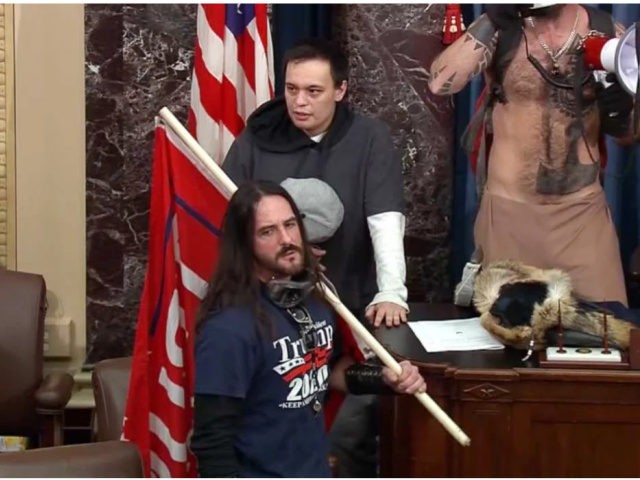
PAUL ALLARD HODGKINS
KNIGHT TRUMPIST
Breitbart reports this:
A man who engaged in non-violent protest at the Capitol on January 6 was sentenced to eight months in prison this week for obstructing an official proceeding, while hundreds charged in violent riots last summer have seen their cases dropped.
Paul Allard Hodgkins, 38, of Tampa, Florida, was sentenced Monday after he pleaded guilty to a single felony count of obstructing an official proceeding, after he was identified in videos and photos inside the Senate chamber carrying a Trump 2020 flag.
Absurdly –
U.S. District Court Judge Randolph Moss told Hodgkins, “Although you were only one member of a larger mob, you actively participated in a larger event that threatened the Capitol and democracy itself. The damage that was caused that way was way beyond a several-hour delay of the vote certification. It is a damage that will persist in this country for several decades.”
Mona Sedky, an assistant U.S. attorney argued, “Imposing prison time “will send a loud and clear message to other would-be rioters that if and when they’re caught, they will face a serious sentence. So there won’t be a next time.”
Will it indeed?
Let’s see what clear messages against rioting are being sent from the courts:
Hundreds of people who were arrested in connection with riots last summer have seen their charges dismissed. There were 485 arrests in Manhattan, but 222 had their cases were dropped and 73 got lesser counts. Another 40 cases involved juveniles and were sent to family court, and 128 cases remained open. In the Bronx, of 118 arrests made, 73 cases were dismissed, 18 cases remained open, and there were only 19 convictions on counts like trespassing that carried no jail time.
There were already more than 300 arrests on federal crimes since George Floyd’s death – violent crimes including arson for throwing Molotov cocktails and burning police cars, and injuring law enforcement.
About one-third of the cases were for crimes in Portland, including assaulting a deputy U.S. marshal with a baseball bat, setting fires and setting off explosives at the federal courthouse and throwing rocks at officers. [But] federal prosecutors in Portland have moved to dismiss almost half the cases. Of 96 cases the U.S. attorney’s office filed last year charging protesters with federal crimes, including assaulting federal officers, civil disorder, and failing to obey, prosecutors have dropped 47 of them. Only 10 people have pleaded guilty to related charges and two were ordered detained pending trial, but none had yet gone to trial. The penalties levied against any federal defendants largely consisted of “community service, such as working in a food bank or encouraging people to vote” [!].
Four rioters who took part in pro-BLM riots last summer did receive jail time, however, but for setting fire to the Minneapolis Police Department’s Third Precinct headquarters and causing $12 million in damages. There was an estimated $1 billion-plus in riot damage after Floyd’s death — the most expensive in history.
The message this record conveys is clear enough, but it is not a warning against rioting.
The message is: “Vote Democrat and support BLM to help destroy America.”
No 71
Donald Trump was a great president. He is a great man. But too good, too kind, too tolerant. His excessive restraint was a weakness. He was overcome by the bad, the cruel, the bigoted Left.
Kurt Schlichter wants and expects a Strong Man next, to restore America to its political senses; the Man who will wield the power of No.
He writes at Townhall:
Get ready for Strong Man Populism. The bad guys – the soft elite who think it can hold onto the societal power it inherited, but did not earn, through petty oppressions – will call it “authoritarianism”. Of course, they like authoritarianism when they are the authority – that’s why they feel no compunction about remaking our country and culture without bothering with obtaining our buy-in. But history teaches – not that they would know it, because they have never been taught it – that a backlash is inevitable.
We’re going to turn to someone who won’t be deterred by cultural caterwauling, who will not be satisfied with a status quo ante that is deeply anti-American, who will ruthlessly use his power to reclaim our society for us, and who will wreak vengeance on our enemies.
That last one is important. They must learn never to do this again.
We’re going to elect a Strong Man Populist because the current crisis is intolerable …
Drug-addled hobos, junkies, and degenerates infest our cities and, increasingly our suburbs. The elite answer is, of course, to destroy the suburbs.
Our teachers, in the rare cases they teach, teach our kids to hate our country.
Our warriors, in the all too common cases they war, lose, and also teach our kids to hate our country.
Our voices are silenced, we have no institutional advocates; the institutions designed to vindicate our rights won’t. …
But when the ordinary ways to have our voices heard are closed off to us, we’ll find extraordinary ones.
Trump was one. He was a warning. But he was, despite the mass-micturition of the elite – no radical. He had no desire to lay waste; he wanted to rule, but as a member of what he did not understand was a terminally ill ruling caste. Remember how he was caught up in institutional prestige – this college was great, that company was respected? This, as well as the fact that he showed up without a Rolodex and needed to rely on a bunch of establishment acolyte-kissers, made him too weak to truly use his power. Yet even with his limitations, he did many amazing and consequential things.
The Strong Man Populist coming soon will not have that weakness. He will not hesitate to use his power to clean house, to prosecute the criminals, to defeat our enemies, both foreign and domestic.
He will unleash the power of No.
No, hobos, you can’t live on our streets.
No, criminals, you don’t get to commit crimes.
No, Pentagon, you are going to focus on winning wars.
No, academia, you do not get to take our money and use it to turn our kids into little commie saps.
No, tech jerks, you do not get to decide what we can read and say.
No, climate cultists, we are not going to live in caves because of your bizarre, quasi-religious weather obsession.
No, media, you do not get to be partisan advocates and also treated like neutral truth tellers.
No, Democrats, you don’t get to steal elections.
No.
No is the weapon of the Strong Man Populist; it is our weapon. It is a rejection of elite hegemony, and the ruthless use of power to enforce it. And it is coming.
The establishment should have heeded the warning that was Donald Trump. But if it was smart enough to do that, it never would have botched its cultural curation so spectacularly that it made him necessary.
The best part of the coming Strong Man Populism will be watching them cry.
Yes, there are times when Schadenfreude is fully justified – and in any case irresistible. May such a time come soon!
But can such a Strong Man be found?
Can he already be seen on the political horizon?
Would you vote for him?
Conservatism: the unending battle 127
What is the nature of conservatism in the English-speaking world?
Extract (slightly revised) from Thatcher’s Thinkers: Anecdotes of a Bit-Player by Jillian Becker at New English Review:
Conservatism is not optimistic. It envisions no utopias. It expects no human being to transcend human nature. Its highest political value is personal liberty protected by law. It wants to preserve the achievements of the past, add to them as the era permits, and hand on the augmented heritage to new generations. It is not against changes, but against Change, against Transformation. And it knows that to preserve and extend traditions and accomplishments, the guardians must fight unremittingly forever.
What is worth conserving now? 158
The Left, a passionately destructive movement, has won. The Right has let it win.
Where now can those who want to live what had become the normal life of the West – being safely free under the law, having children, enjoying family life, gaining knowledge and prosperity, contributing talent and labor, pursuing happiness – look for the preservation and protection of that normality?
Not to any institutions we can think of – government, police, army, intelligence agencies, courts of law …
Not to the Republican Party. Not to any conservative organization or grass roots movement.
Does that mean that the greatest civilization in human history, begun in the Renaissance and launched by the Enlightenment, is now over and done with? Is this the suicide of the West?
Having taken away the security of equality under the law; having put an end to real education; having wrecked the arts; having, in short, destroyed in a few decades the greatness that had taken centuries to build, the destructive Left now concentrates on putting an end to the human race itself – by sterilizing it.
Pedro Gonzalez writes at American Greatness:
The first thing we have to accept about the culture war is that the Republican Party and the conservative movement have lost.
Nowhere is this more evident than in the battle of the biological sexes, lost without a shot fired.
In the United States, Congress generously provided $5.7 million in taxpayer dollars to the National Institutes of Health for a study wherein children as young as age 8 received puberty-suppressing, cross-sex hormones that will render them permanently infertile.
Nationally, Republicans like Arkansas Governor Asa Hutchinson and South Dakota Governor Kristi Noem have capitulated to the queer zeitgeist. Hutchinson vetoed a measure to ban castration for minors suffering from gender dysphoria, also known as “gender-affirming therapy”. Noem effectively killed a bill intended to restrict transgender participation in women’s sports. Even when they had the upper hand over Democrats in Florida and Texas, limp-wristed Republicans performed silent retreats from transgender sports bills, allowing Democrats to run the table.
Conservatives accept the Left’s premise that transgenderism is normative and, therefore, something to be glorified and even celebrated when they speak of the “rights” of the transgendered. The alternative, in this view, is rank bigotry and perhaps even violence. But this is a false choice.
No one should suffer abuse, but rather than exalting the virtues of our transgender culture, the Right should reject the normalization of what is essentially a pathology connected to staggering suicide rates.
An order wherein underage boys can receive hormone blockers to hinder the growth of their penises, and have male genitalia “reconstructed” into female genitalia, is not worth preserving.
Yet –
This is the order the conservative movement and Republican Party seek to preserve. They do not reject it but only protest that treatment should not be taxpayer-funded and that sports remain free of biologically unfair competition, blind or indifferent to the dishonor of it all.
A civilization that legalizes the sterilization and mutilation of its children has put itself on a path toward suicide by robbing its sons and daughters of the ability to procreate even as birth rates plummet.
It has chosen to die a humiliating death.
But transgenderism is only the latest failure of conservatism and the GOP, which has surrendered on everything including immigration, criminal justice, and reparations.
There is, therefore, no reason to be “conservative” because to be conservative in America today is to preserve an order that has lost its legitimacy, and the right thing is not to conserve but destroy it and institute something else. The Republican Party, as it stands, is and will continue to be an obstacle to this cause.
What “something else” can be “instituted”? How? When? By whom?